De lederhuid betekenis
De lederhuid, met zijn systeem van uitsteeksels en verhogingen (papillen), dringt in de opperhuid. Door deze papillen ontstaat een verdere bescherming tegen mechanische belasting. Vooral op plaatsen die sterk belast worden, zijn de papillen sterk ontwikkeld. Aan het collageen dankt de lederhuid ook zijn naam. Bij looiing van een huid verdwijnt het epitheel en verdicht het collageen zich tot datgene dat wij "leer" of "leder" noemen. Direct onder de epidermis is de dermis minder rijk aan vezels. 
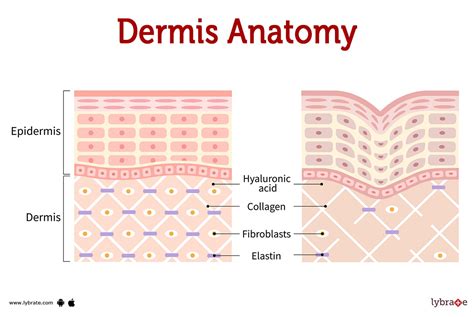

Collageen What is collagen? Collagen is the most abundant protein in your body. It accounts for about 30% of your body’s total protein. Collagen is the primary building block of your body’s skin, muscles, bones, tendons and ligaments, and other connective tissues.


- De lederhuid betekenis Wat is de structuur van de huid? Wat is de opperhuid? Wat is de lederhuid? En wat zijn de functies van de huid? Lees het hier!.
Dermis
Learn about the dermis, the middle layer of skin that supports, protects and feels your body. Find out what conditions and disorders can affect the dermis and how to treat them. The dermis is the middle layer of the skin that consists of dense irregular connective tissue and provides cushioning, sensory perception and nourishment. It is divided into two layers, the papillary dermis and the reticular dermis, and contains various structures such as hair follicles, sweat glands, blood vessels and dermal papillae.Dermis The dermis is the thickest layer of skin that contains collagen, blood vessels, sweat glands, oil glands, hair follicles, and nerve endings. It regulates temperature, produces sweat and oil, grows hair, feels sensations, and protects the body from toxins and infections.
Huidlagen
Leer hoe de huid is opgebouwd uit drie lagen: de opperhuid, de lederhuid en het onderhuidse bindweefsel. Ontdek de functies van elke laag, zoals bescherming, regeling en isolatie, en hoe je je huid kunt verzorgen. Leer over de drie lagen van de huid: epidermis, dermis en hypodermis. Ontdek hoe de huid je beschermt, reguleert, voelt en groeit.Huidlagen The skin is the largest organ in the body, covering its entire external surface. The skin has 3 layers—the epidermis, dermis, and hypodermis, which have different anatomical structures and functions (see Image. Cross Section, Layers of the Skin). The skin's structure comprises an intricate network that serves as the body's initial barrier against pathogens, ultraviolet (UV) light, chemicals.